
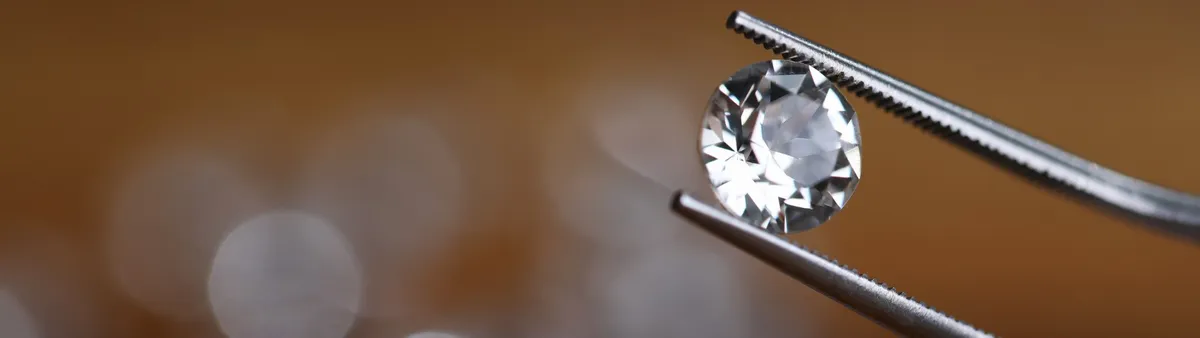
Natural diamonds are more than just beautiful gemstones—they’re rare treasures made over billions of years. This guide from Dahlkemper's Jewelry Connection will help you understand what a natural diamond is, how it forms, how it stacks up against lab-grown ones, and more!
What Makes Natural Diamonds Special?
Natural diamonds are diamonds mined directly from the Earth. This dynamic stone has a long history that can be traced back to 800 BCE India. Diamonds have since become a cornerstone in the jewelry industry among many other industries. But what exactly makes diamonds so special? There are many reasons for diamonds’ high value besides their sheer strength and beauty. Rarity, however, remains at the top.
Most natural diamonds form very slowly about 125 miles (20 km) from the Earth’s surface over a billion years ago, under incredibly tortuous conditions. Then, diamonds were brought up by eruptions in kimberlite volcanoes, a special type of volcano. The last eruption happened over a dozen million years ago. Out of 1 million parts Kimberlite, you will only get 1 part diamond.
Lab-Grown vs Natural Diamonds
Simply put, lab-grown diamonds are created in a laboratory whereas natural diamonds are created deep within the earth. Contrary to popular belief though, both are considered real diamonds because they virtually have the same chemical, physical, and optical properties.
In fact, they are almost impossible to tell apart without the help of expert gemologists and specialized equipment. However, they still have some key differences.
For example, natural diamonds grow into either octahedral or needle-like forms while lab-grown diamonds grow into cuboidal or cuboctahedral forms. Also, while natural diamonds likely have minor imperfections, that form naturally during the diaonds growth process, and adds to each diamond’s uniqueness.
Compared to mined diamonds, lab-grown diamonds cost up to 90% less. In terms of long-term investment value, natural diamonds are the better choice and hold their value and even appreciate over the years, largely due to their finite supply.
Many people place greater sentimental value on billion-year diamonds than cultured diamonds, making them the perfect stone for engagement rings—symbolizing a commitment to forever.
While lab-grown diamonds are often seen as the most ethical and eco-friendly option, this isn’t completely true. The vast majority of these diamonds are created using fossil fuels. It’s actually more sustainable to buy second-hand natural diamonds or repurpose ones from old jewelry.
Last but not least, remember that natural diamonds don’t mean blood diamonds. Since the early 2000s, the diamond industry has been sourcing diamonds ethically through international programs like the CanadaMark certification and Kimberley Process. The Kimberly Process is a coalition of governments, civil society and the diamond industry to elminate the trade in so-called conflict diamonds. Buying ethically sourced diamonds can also mean supporting local communities in mining regions. Many diamond companies are investing in renewable energy sources, such as solar, wind, and hydropower, for mining operations. For example, De Beers has been using solar power plants since 2019 in its mines to reduce reliance on traditional fossil fuels. Providing point of origin has always been a topic of question and at Dahlkemper's Jewelry, we are committed to staying on top of cutting edge technology that support the efforts of identifying a clear supply chain from ground to sales floor counter.
The 4Cs of Diamonds
Standardized by the Gemological Institute of America, the 4Cs of diamonds are globally recognized as the main criteria to consider when determining the quality of these precious gemstones. Both natural and lab diamonds are graded based on these criteria.
To be specific, the four Cs stand for cut, color, clarity, and carat. The value of a diamond is directly impacted by all these factors, although the rarity of each factor has the greatest influence on pricing.
1. Diamond Cut
The cut of the diamond refers to the arrangement and proportions of a diamond's facets, which directly impact its brilliance and sparkle, and is the most important factor in determining a diamond's beauty and value. Often times, people mistake the cut for the shape of the diamond. A well-cut diamond will maximize light reflection and refraction, resulting in greater brilliance and sparkle. The cut grade for a diamond goes from Poor to Excellent aka Ideal. A well-cut diamond will appear extremely brilliant and dazzling when it interacts with white light. Cut is a subjective element, but a well-propotioned diamond will generally be more visually appealing. We follow GIA's (Gemological Institute of America) standard for cut grade. GIA provides a comprehensive grading system that evaluates symmetry, proportion, and polish of a diamond.
2. Diamond Color
Diamonds come in a variety of hues, from colorless to yellow, gray, brown and nearly every shade of hte rainbow. For diamond color, or the lack thereof, Colorless (D) ones have the highest grade, coming down to Light (Z). In the normal range, colorless diamonds are the rarest, fetching the highest prices. What is color? Color is the presence of nitrogen in the carbon. A "D"-color diamond, considered the most colorless, ideally contains no or a negligible amout of notrogen (a trace element), and is often classified as a Type IIa diamond, meaning it has a very pure carbon structure.
The trace elements in predominantly carbon-rich diamonds are what give them color. Nitrogen, for instance, gives diamonds a yellow color. Fancy color diamonds in shades of blue, green, and pink—among other colors—are graded on a different scale based on tone and saturation.
Before GIA developed the D-Z Color Grading Scale, a variety of other systems were loosely applied. These included letters of the alphabet (A,B, and C, with multiple A's for the best stones). The result of all of these grading systems was inconsistency and inaccuracy. Because the creaters of the GIA Color Scale wanted to start fresh, without any association with earlier systems, they chose to start with the letter D- a letter grade normally not associated with top quality.
3. Diamond Clarity
Every diamond is uniquely different. The clarity of a diamond is based on the size, location, visibility, and number of inclusions or blemishes. Most diamonds in the market fall within the middle range, somewhere in the middle range. See below for more details. Internal and surface reaching characteristics are called inclusions. External features are called blemishes. Many blemishes and inclusions are not visible to the naked eye. GIA's standard, which we follow, is that clarity, polish, and symmetry grading can only be determined using a 10x loupe. Grading clarity should be left to a skilled grader.
Universal System. All under 10x magnification:
- Flawless (FL) - No inclusions and no blemishes visible.
- Internally Flawless (IF)- No inclusions visible but does have blemishes.
- Very, Very Slightly Included (VVS1 and VVS2) - Inclusions are observed with effort but can be characterized as minor.
- Slightly Included (SI1 and SI2)- Inclusions are noticeable.
- Included (I1,I2,I3)- Inclusions are obvious which may affect transparency, brilliance and durability.
4. Diamond Carat
Diamonds and other gemstones are weighed in metric carats. Don't confuse carat (1.00CT) with karat (KT like 14KT) or carrot. Carat weight is a diamond’s actual weight measured in metric carats (ct). One carat is equivalent to about 0.007 ounces (0.200 grams) divided by 100. This quality factor is considered the most objective of the four Cs.
Large diamonds such as 2CT- 3CT + are rare and generally larger price tags. But remember that all quality factors are taken into consideration together when placing value on a diamond. So a smaller diamond with higher cut, color, and clarity grades can be more expensive than the bigger one.
How to Choose the Best Diamond for You
A natural diamond is more than just a gemstone—it’s a piece of Earth’s history, shaped by time and nature. Understanding how natural mined diamonds compares to lab grown diamonds and the 4Cs diamond grading system can help you make a confident choice.
Shop Loose Diamonds Today!
Beyond rarity and high grades, the perfect diamond should match your style and budget. Whether exploring lab-grown vs. natural diamonds, go with what speaks to your heart!